Tours
Herculaneum
Four and a half hectares of Roman town under the modern one: upper floors still standing, charred wood, the ancient beach with its boat sheds.
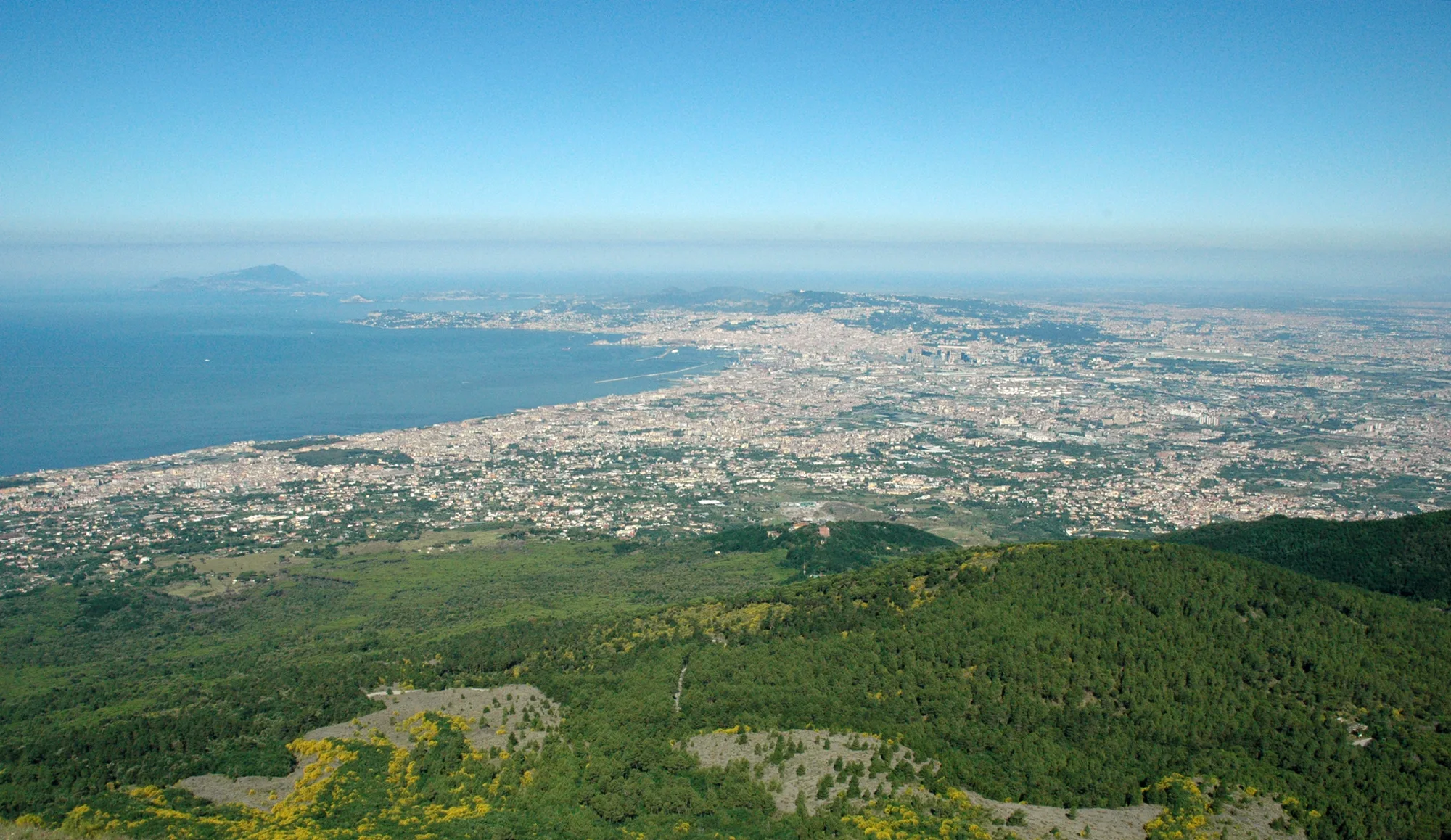
From Vesuvius towards Naples: the coast at the foot of the volcano, with the city and the bay beyond.
- From Naples
- 25min
- Visit
- about two hours
- Pairs with
- Mount Vesuvius, Pompeii, Naples old town
Herculaneum went under in the same 79 AD eruption, but beneath pyroclastic flows rather than ash and lapilli. The heat carbonised organic matter and so preserved it: wooden structures, upper floors still standing, even food. Elsewhere those things simply did not survive.
It is far smaller than Pompeii. The walled ancient town covered some twenty hectares, of which about four and a half are open to the sky, for perhaps four thousand inhabitants. The rest lies under modern Ercolano, built directly on top. You can cover it in a reasonable time, which changes how you plan the day.
Photo: DimiTalen · CC0

What you see
The ancient beach and the boat sheds
The Martusciello Gallery, reopened in July 2026, is a tunnel of over a hundred metres cut through the volcanic deposit: it drops from the level of the modern town to the ancient shoreline. In the fornices, the boat sheds, lie the remains of around three hundred people.
The House of the Deer
One of the largest houses in the ancient town, on two levels: the ground floor for the owners, the upper one for the household staff. It reopened along with the Casa del Bel Cortile, the Casa dei Due Atri and the Casa dell’Erma di Bronzo.
Baths, palaestra and Augustales
Apart from the baths, the palaestra and the Seat of the Augustales, almost everything open here is private housing of the imperial age: conventional plans, multi-family blocks, and large residences whose best rooms faced the sea.
The Villa of the Papyri
Only partly excavated, this is the villa of the carbonised scrolls that gave it its name. Much of ancient Herculaneum is still underground, the forum area with its sacred and civic buildings included: here the dig is not finished, only paused.
Getting there with us
- The main gate is at Corso Resina 187; the second is at via dei Papiri Ercolanesi 19, next to the municipal car park. We set you down at whichever you prefer.
- You come off the A3 Napoli–Salerno at Ercolano Scavi and then follow the signs to the archaeological park. Of the Vesuvian sites it is the closest one to Naples.
- Herculaneum and Vesuvius share a road: the provincial road up to the crater starts here, so the two fit into one day without doubling back.
Worth knowing
- Tickets come from the park’s official channel, ercolano.coopculture.it, and are shown at the gate from your phone or printed.
- The ancient Theatre is a separate visit: you go down into the tunnels dug by Bourbon engineers in the eighteenth century, about twenty-five metres below street level, with park staff. Closed, sturdy shoes are required; helmet and torch are provided.
- The site lies below the modern town: you walk down into it and back up again, so comfortable shoes. If mobility is a problem, say so at the ticket office when you go in.
- If you want a guided visit, book it directly with a licensed tourist guide. We take care of the driving.
On the same day
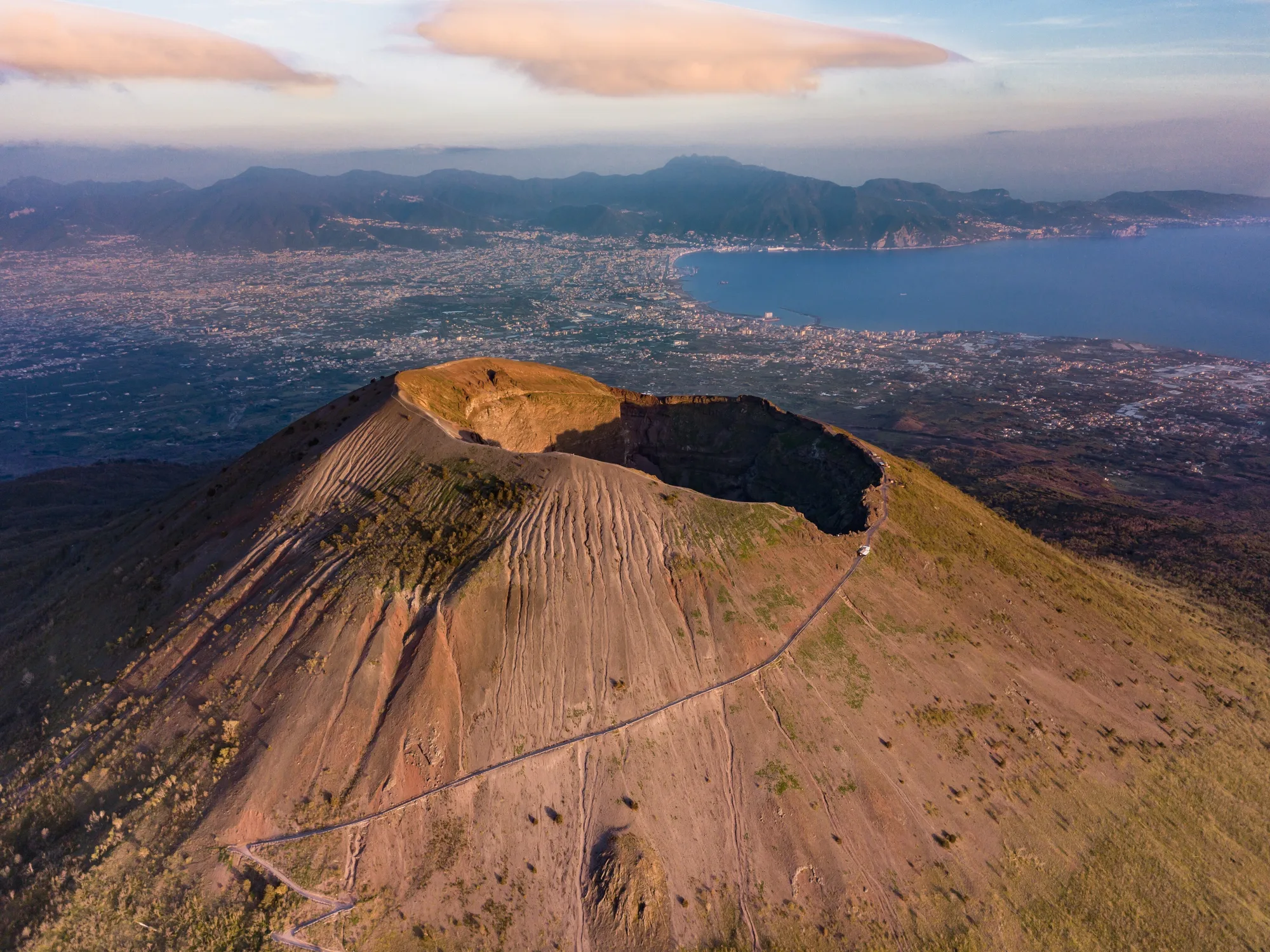 Mount Vesuviusfrom Naples 50minA crater 580 metres across at 1,175 m, and the whole bay from up there. The last stretch is on foot, about twenty minutes uphill.
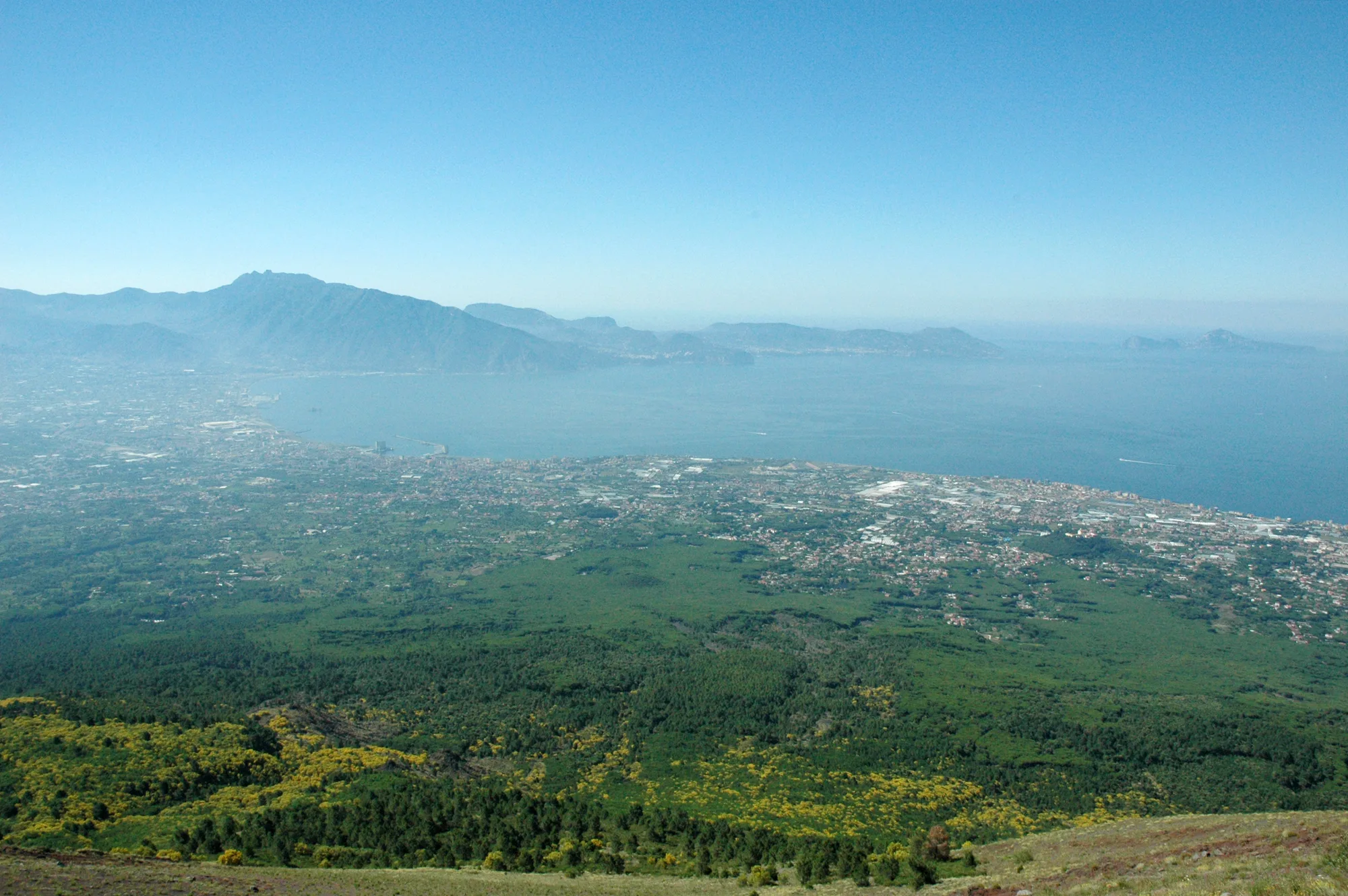 Pompeiifrom Naples 40minA Roman city of 66 hectares, some 50 excavated: forum, painted houses, an amphitheatre from 70 BC. Open air, on ancient paving.
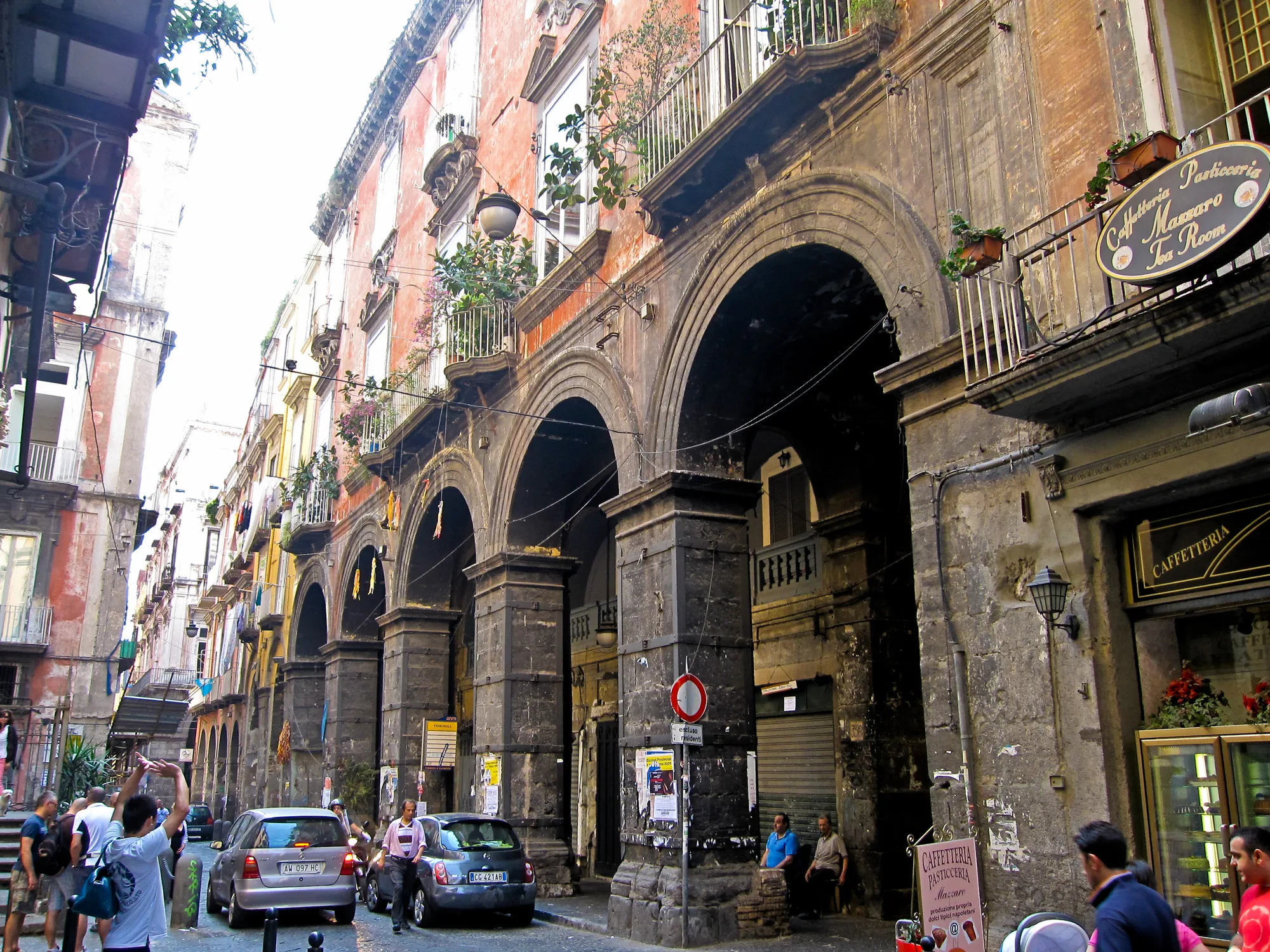 Naples old townThe Greek street grid is still there, and much of it is closed to traffic: you walk it, and the car waits at the edge.